

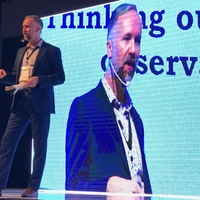
Matt O'Leary
Professor Dr Matt O’Leary is Professor of Education at Birmingham City University. His main research interests focus on education policy and practice in further and higher education, particularly in the context of the professional learning of educators and the development of pedagogic practice. Professor O’Leary is one of the world’s leading experts on the topic of classroom observation and he is internationally renowned for his extensive body of work on the use of classroom/lesson observation in understanding and improving teaching and learning across colleges, schools and universities. His research has had significant impact in the UK and internationally on education policy and the thinking and practice of education leaders, practitioners and researchers working in all education sectors over the last two decades.
Professor O’Leary’s original, groundbreaking research in the further education (FE) sector in England, funded by the University and College Union (UCU), has had and continues to have far reaching impact on education policy and practice nationally (UCU 2013). This body of work has been instrumental in challenging engrained orthodoxies and influencing policy and practice across education sectors. For example, it has shaped the policy of one of the largest unions in the world, with a dedicated web presence created to capture some of its outputs https://www.ucu.org.uk/lessonobservation, along with a review of the main teaching unions’ policies on observation across colleges and schools in the UK. The findings from the UCU project report were widely reported in the national media (e.g. Allen 2014; Morrison 2015) and led to a landmark policy change by Ofsted with the removal of graded lesson observations from its inspection framework. O’Leary’s work on observation over the last decade has also had a direct impact on higher education departments (from primary to post-compulsory) have used his work to inform modular content and design on their programmes for trainee and experienced teachers.
Over the last decade, Professor O’Leary has continued to develop his work on observation more recently in higher education (e.g. O’Leary & Cui 2023; O’Leary & Cui 2020; O’Leary & Savage 2019), with his ongoing research influencing policy, practice, attitudes, awareness and understanding of observation institutionally, regionally, nationally and internationally. His research has helped to inform the development of an innovative scheme of teaching observations that has reconceptualised and reconfigured observation from something traditionally perceived in education as a narrow, performance management mechanism to an expansive, formative and supportive tool of educational inquiry (e.g. O’Leary & Savage 2019; O’Leary & Wood 2017).
Professor O’Leary has written widely on classroom observation, teaching excellence and professional development. His books include Reclaiming lesson observation: supporting excellence in teacher learning (Routledge 2016), Teaching Excellence in Higher Education: Challenges, Changes and the Teaching Excellence Framework (Emerald 2017) and the highly acclaimed Classroom Observation: A Guide to the Effective Observation of Teaching and Learning - Second Edition (Routledge 2020). His newest book is Developing Excellence in Teaching and Learning in Higher Education through Observation. (Routledge 2023), co-written with his BCU colleague Dr Vanessa Cui.
Recent research projects that Professor O’Leary has led on include:
Enhancing Learning and Teaching Quality through Collaborative Observation (Funded by the QAA – £10,000)
The role of leadership in prioritising and improving the quality of teaching and learning in further education (Funded by the Further Education Trust for Leadership – £59,000)
Understanding, recognising and rewarding teaching quality in higher education: an exploration of the impact and implications of the Teaching Excellence and Student Outcomes Framework (Funded by the University and College Union – £40,000)
Address: Birmingham City University
Faculty of Health, Education and Life Sciences
City South Campus
Ravensbury House
SRA 216
Westbourne Road
Edgbaston
Birmingham
B153TN
http://www.bcu.ac.uk/research/-centres-of-excellence/centre-for-research-in-education/people/matthew-oleary
less
InterestsView All (14)
Uploads
Books by Matt O'Leary
Project Reports by Matt O'Leary
an independent research project into the role of leadership in
prioritising and improving the quality of teaching and learning in
further education. The project captures the views and experiences
of further education (FE) staff working at all levels, from senior
leaders to hourly paid tutors and learning support staff.
The FE sector has endured one of the most challenging and
turbulent periods in its history of late. With FE the only part of
the education budget to have experienced year-on-year cuts
since 2010, the financial position of the sector has worsened
considerably in the last decade. Combined with the instability
caused by relentless policy reform, a period of unprecedented
marketisation and high-stakes inspection and accountability
systems, it is perhaps unsurprising that these factors have led to
what Keep (2018) describes as the ‘perfect storm’ for FE, with
the future shape and direction of the sector looking uncertain. In
light of these adversities, it is all the more remarkable then that
FE continues to deliver a high level of quality in teaching and
learning in the majority of its providers. However, what is not yet
fully understood is what the relationship is between leadership
and improving teaching and learning and how leadership makes
or fails to make a difference. This research project emerged in
response to these questions, to address these gaps in knowledge
in the context of the wider FE backdrop.
The introduction of the Teaching Excellence Framework (TEF) in 2016 marked a key turning point for HE in the UK. Never before has the ‘quality’ of HE teaching been subjected to such external scrutiny, culminating in high stakes assessment outcomes for institutions through the TEF’s medal categories of gold, silver and bronze. HE providers are still very much coming to terms with what the TEF means for them and how best to organise their institutional responses. Thus the TEF and the whole debate around the quality of teaching in HE is not only live and topical but equally one that continues to raise more questions than answers across the sector.
Between February and November 2018, a team of academic researchers from Birmingham City University (BCU), commissioned by the University and College Union (UCU), carried out an independent study aimed at plugging the gap in knowledge and research relating to the impact and implications of the TEF on those working in HE. The study aimed to investigate UCU members’ awareness, involvement and perception of the TEF and its impact on them. The project was commissioned in anticipation of UCU’s contribution to the Independent Review of the TEF in 2019. UCU also recognised the need for staff perspectives to be made more visible in the Review, which has not been the case in the development and implementation of the TEF to date, as they have largely been excluded from the process. Thus one of the unique contributions of this report to debates around teaching excellence and the TEF in particular is the inclusion of the voices and experiences of the HE workforce who are most directly affected by this policy reform.
A distinctive strength of this report and the research project it encapsulates is the scale and breadth of the sample it captures. To date, no other study has harnessed the views of such a large representation of staff working in HE provision about the TEF. The TEF and how it has impacted on the professional lives of the HE workforce was a subject about which the participants in this project had a lot to say. This report brings together a wealth of perspectives, opinions and situated experiences generated in the project data through the voices of those directly involved in and affected by the TEF.
This report has drawn on a range of evidence collected during the research project to inform its findings and recommendations. These include: 1) a literature review on teaching excellence and cognate publications; 2) an online survey of university and college-based HE staff across England, Scotland, Wales and Northern Ireland; 3) a series of national strategic seminars hosted in England and Scotland and 4) interviews with representatives from the TEF assessment panel and the NUS.
* Please note only the first two pages of the executive summary are included here. The report itself is over 100 pages long and available on request from UCU *
Papers by Matt O'Leary